Bixie Cut: The Lived-in Pixie-bob With Soft Layers And Big Volume
Published on February 6, 2026
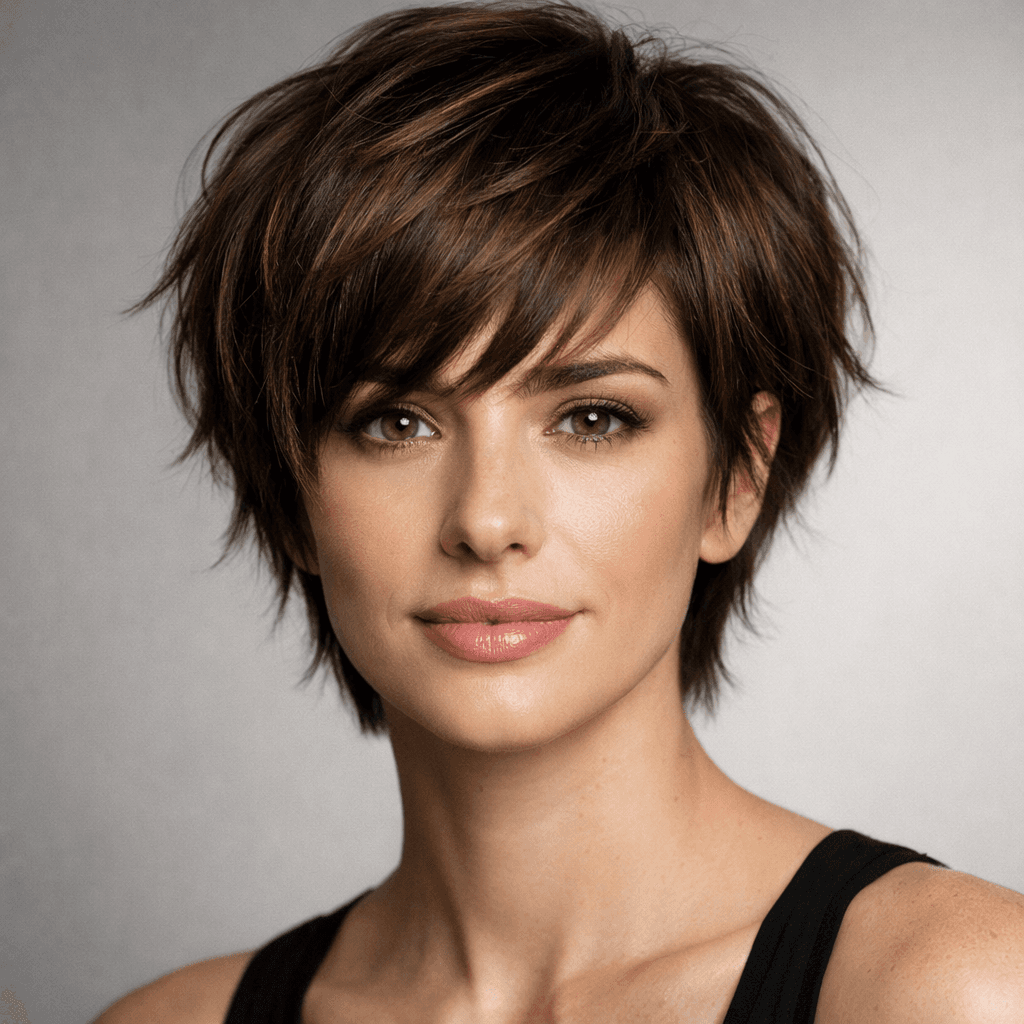
Bixie Cut: The Lived-in Pixie-bob With Soft Layers And Big Volume
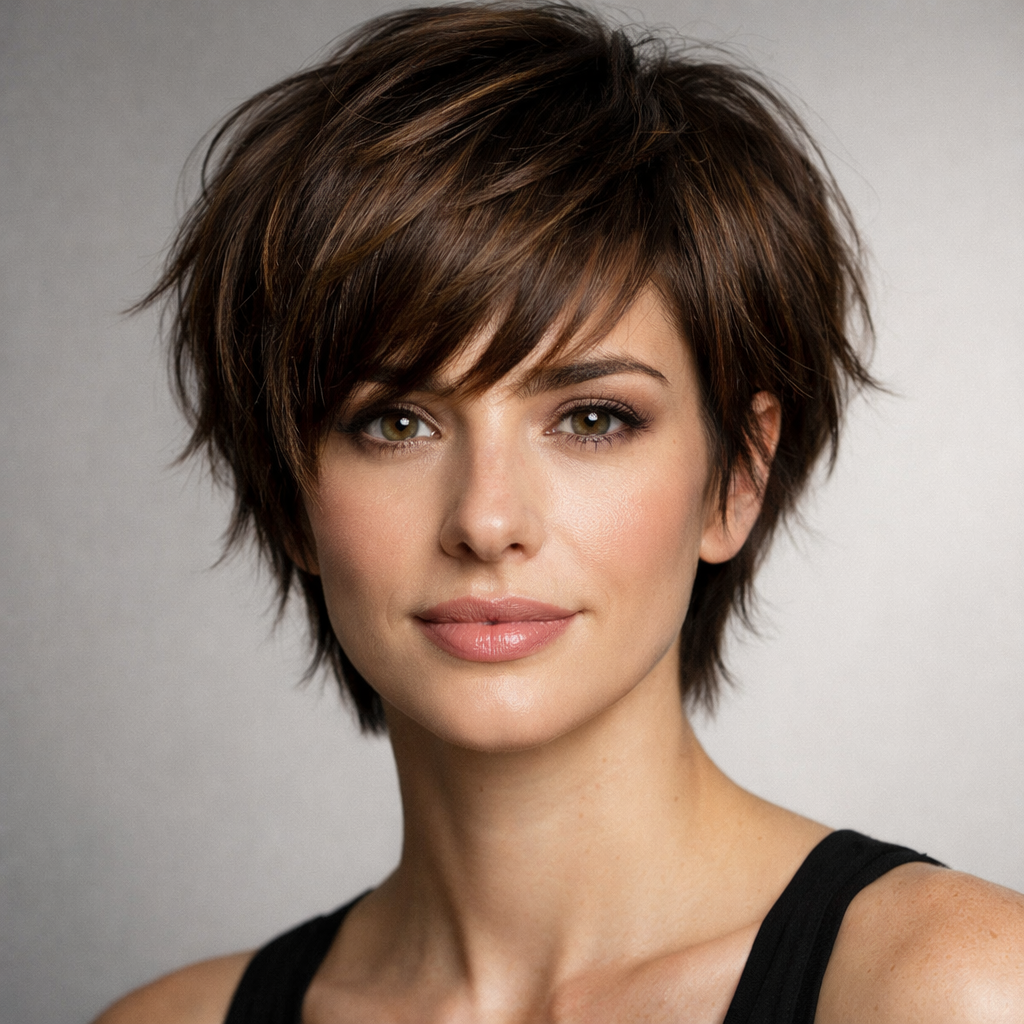
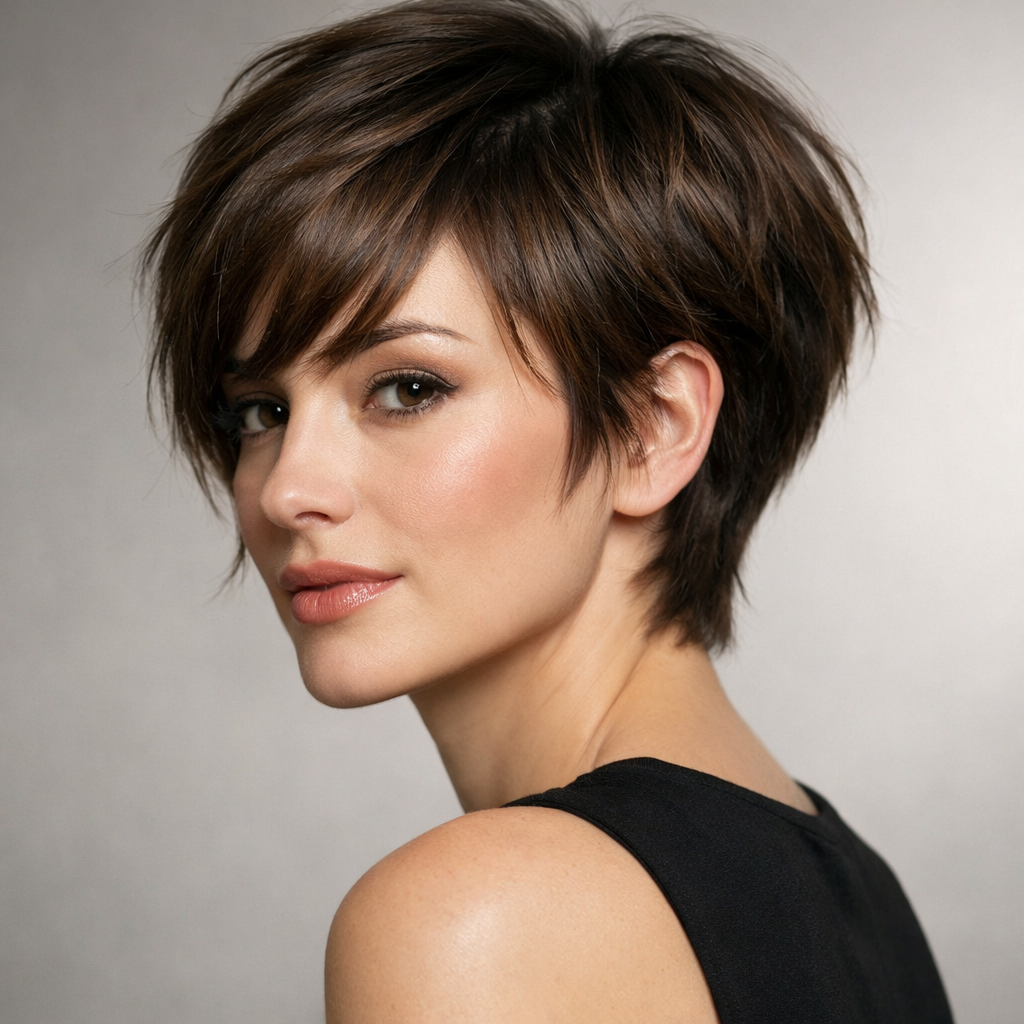
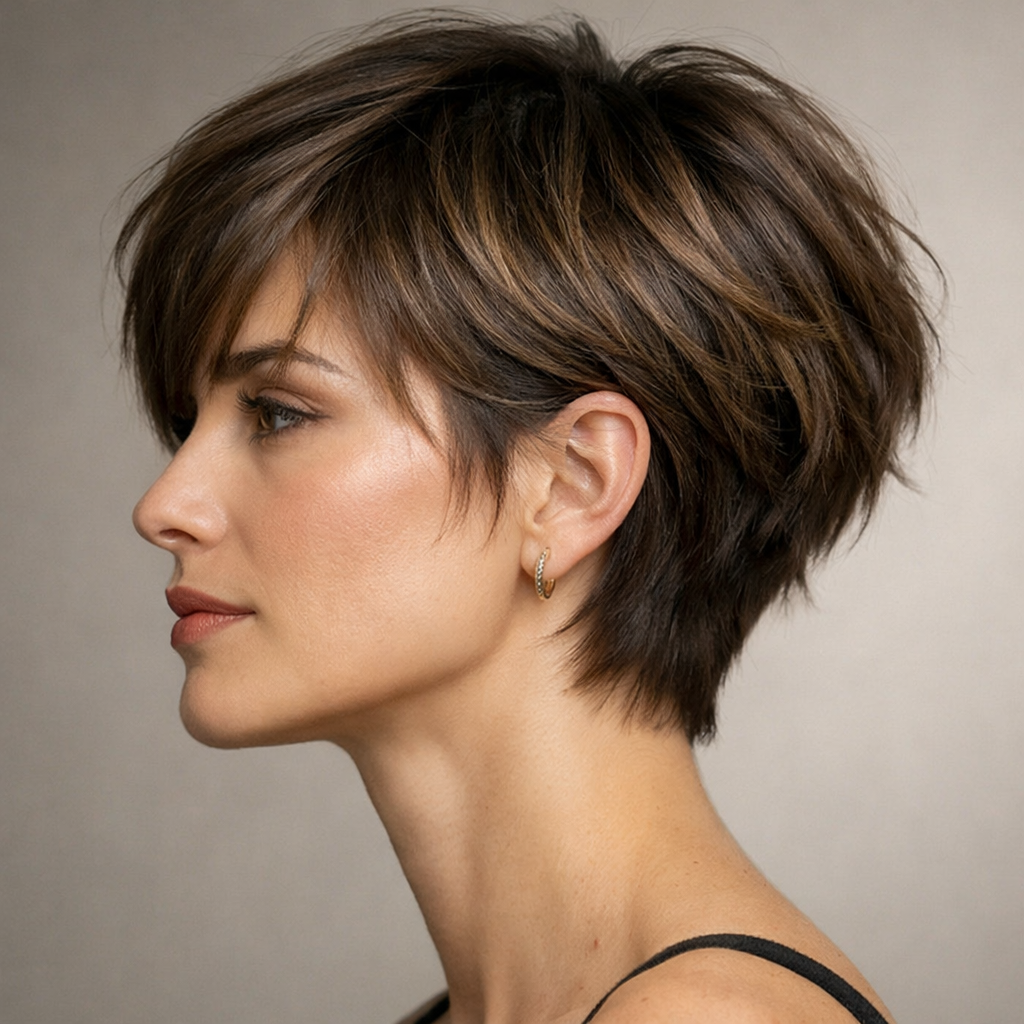
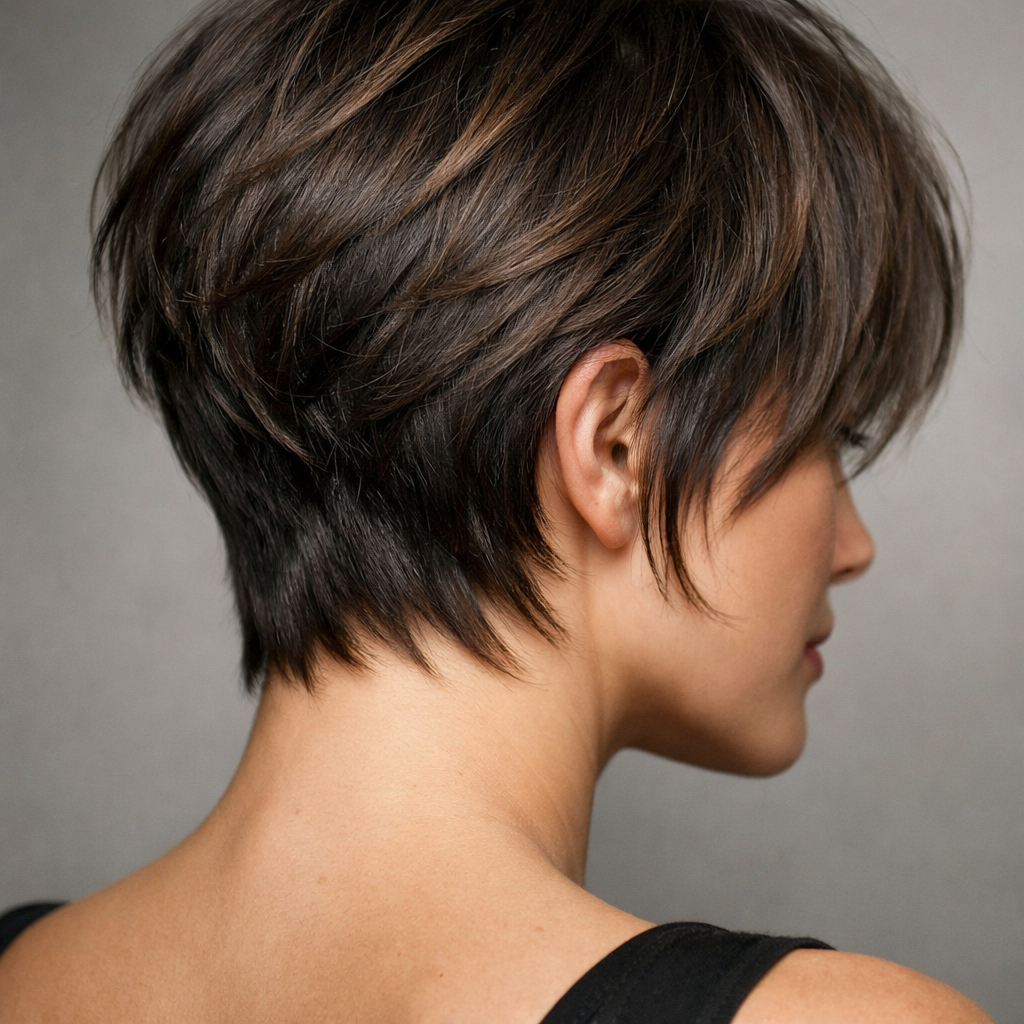
The bixie cut—a hybrid of a pixie and a bob—delivers that effortless, “done but not overdone” texture in one modern shape. If you’re browsing long + layered styles but want to go shorter without losing movement, a bixie is a smart transition: it keeps length where it counts (crown/fringe), adds face framing layers, and makes volume styling fast.
Table of Contents
- Bixie Cut Specs (Quick Look)
- Key Takeaways
- What Makes a Bixie Different?
- Styling Tips for Volume and Texture
- Maintenance: How to Keep a Bixie Looking Fresh
- How to Ask Your Barber/Stylist
- Common Mistakes to Avoid
- Variations to Try
- Who It Suits (and Who Should Skip It)
- Try the Bixie Cut Virtually Before You Commit
- FAQ
- Final Thoughts
- Ideal Hair Type and Face Shape
- Pros and Cons
- Explore More
If you like the vibe of a shag haircut or wolf cut but want something cleaner around the neck and lighter overall, the bixie hits the sweet spot.
Bixie Cut Specs (Quick Look)
- Length: Short to medium-short; bob-like perimeter with longer top/crown
- Vibe: Lived-in, textured, airy, slightly edgy but wearable
- Best face shapes: Oval, heart, diamond; adaptable for round/square with the right fringe and face framing
- Hair types: Straight to wavy; fine-to-medium is ideal, thicker hair needs internal debulking
Note: While this page sits in a long-and-layered universe, the bixie borrows the same layering logic you’d request for long layers—strategic graduation, movement, and soft framing—just scaled down.
Key Takeaways
- A bixie is a pixie-bob blend with length on top and a lighter, tapered back.
- Ask for soft face framing layers to flatter cheekbones and open up the eyes.
- For a modern finish, style with lightweight products (mousse + texture spray) for flexible lift.
- Trim every 6–8 weeks to keep the silhouette crisp.
- It can grow out beautifully into a shag haircut or wolf cut with longer lived-in layers.
What Makes a Bixie Different?
A bixie isn’t just “a short bob.” The signature is the layering pattern:
- A bob-like baseline (often skimming the jaw or just below the ear)
- Shorter internal layers for lift and movement (think: compact version of long lived-in layers)
- Longer top/fringe pieces that you can sweep, tuck, or wave
If you’ve ever saved photos of long blunt layers for the clean perimeter plus movement, that same contrast is what makes a bixie look intentional: a defined outline paired with airy texture.
Styling Tips for Volume and Texture
Everyday “Air-Dried but Better” Texture
- Start with towel-dried hair.
- Apply a lightweight mousse at roots (focus on crown and fringe).
- Add a weightless cream only through mid-lengths/ends if you frizz easily.
- Scrunch, then let it air dry or diffuse on low.
Pro tip: Keep product minimal at the ends—too much turns a bixie into a helmet.
Blowout Lift (Best for Fine Hair)
- Use a small to medium round brush.
- Lift at the root, directing hair up and back at the crown.
- Flip the fringe side-to-side while drying for flexible volume.
Finish with a dry texture spray (not heavy hairspray) to lock in movement while keeping touchable separation.
Quick Heat Styling (Piecey, Not Perfect)
- For straight hair: add bends with a flat iron, alternating direction.
- For waves: use a 1-inch curling iron on the longer top sections only.
- Break up the set with a pea-size amount of matte paste warmed in your palms.
Maintenance: How to Keep a Bixie Looking Fresh
- Trim cadence: Every 6–8 weeks for best shape. If you’re growing it out, every 8–10 weeks works—ask your stylist to keep the neckline tidy while letting the crown lengthen.
- Neckline clean-up: A tapered nape looks modern, but it grows out quickly. A small clean-up between cuts can help.
- Color support (optional): Soft highlights or a lived-in root add depth and make layers pop—similar to how dimension enhances long layers.
Product Suggestions (Lightweight = Better)
Look for labels like “volume,” “weightless,” “flexible hold,” and “texturizing.” A simple routine:
- Root lift: volumizing mousse or root spray
- Texture: dry texture spray (for grit + separation)
- Finish: light pomade or matte paste (tiny amount) for piecey ends
- Heat protection: weightless heat spray if you blow-dry or iron
How to Ask Your Barber/Stylist
Bring 2–3 reference photos and use these talking points:
- “I want a bixie cut: a bob perimeter with a tapered nape and longer crown/fringe.”
- “Please add face framing layers that hit around my cheekbones/jaw to shape my features.”
- “Keep the texture lived-in, not choppy—more like soft internal layering.”
- “I want volume styling to be easy—can you build lift at the crown?”
- “If possible, cut it so it can grow into a shag haircut / wolf cut later.”
If you’re nervous about going short, ask for a “long bixie” (slightly longer around the ears/jaw) so it still feels like a layered bob.
Common Mistakes to Avoid
- Too much thinning: Over-thinning can make ends look stringy, especially on fine hair.
- Heavy products: Oils and rich creams can collapse volume and hide the layers.
- Fringe cut too blunt: A super blunt bang can fight the bixie’s soft texture—opt for airy, side-swept, or broken-up fringe.
- No face framing plan: Without intentional face framing layers, the cut can look boxy from the front.
Variations to Try
Choose the version that matches your texture and comfort level:
- Long Bixie: Longer perimeter with soft layers—closest bridge for fans of long layers who want to test-drive short hair.
- Shaggy Bixie: More texture and separation; the most shag haircut-adjacent option.
- Wolfy Bixie: Extra crown lift with slightly longer fringe for that mini wolf cut silhouette.
- Blunt-Edge Bixie: Cleaner outline (nod to long blunt layers) with subtle internal layering for movement.
- Curly/Wavy Bixie: Rounded shape with controlled volume; relies on curl cream + diffuse for definition.
Who It Suits (and Who Should Skip It)
Great match if you want…
- A shorter cut that still has layered movement
- A style that can look polished or messy in minutes
- Easy volume styling without a full blowout
- A gateway from long lived-in layers into something lighter
Consider avoiding (or adjusting) if…
- You dislike frequent trims (a bixie needs shape maintenance)
- Your hair is very thick and you hate styling—ask for internal debulking and a longer perimeter to reduce bulk
- You strongly prefer long hair past the shoulders right now—try a layered lob first (see more ideas in our hairstyles library)
Try the Bixie Cut Virtually Before You Commit
Not sure how short is “too short”? Use InstaHair’s virtual try-on to preview different bixie lengths, fringe options, and face-framing shapes before your appointment. Start from the InstaHair home and test a long bixie vs. a shaggy bixie side by side.
FAQ
What face shapes suit a bixie cut best?
Oval and heart shapes tend to suit bixies instantly. For round or square faces, ask for longer face framing layers and a bit of height at the crown to elongate the look.
How do I add volume to a bixie cut?
Use a root-lift mousse, blow-dry the crown upward, and finish with a light texture spray. Keep heavier products off the ends so the layers stay bouncy.
How often should I trim a bixie cut?
Every 6–8 weeks keeps the neckline and layers looking intentional. If you’re growing it into a longer layered shag/wolf shape, every 8–10 weeks is usually enough.
What heat tools work well for a bixie cut?
A small round brush for lift, a flat iron for quick bends, and a 1-inch curling iron for soft waves on the longer top and fringe sections—always with a lightweight heat protectant.
Final Thoughts
The bixie cut is a confident, low-fuss style that looks sharp with minimal effort. If you want to preview it before you commit, try it on with InstaHair.
Ideal Hair Type and Face Shape
| Hair Type | Face Shape | Why It Works | | --- | --- | --- | | Straight to wavy | Oval, square | Shows off the texture and clean lines | | Wavy with medium density | Round, heart | Adds height and balance at the crown | | Curly (looser curls) | Oval, diamond | Keeps shape while reducing bulk |
If you are unsure, bring reference photos and ask your stylist how to tailor the bixie cut.
Pros and Cons
Pros: easy upkeep, modern shape, quick styling
Cons: needs regular trims, not ideal for very tight curls
Explore More
Bixie Cut: The Lived-In Pixie-Bob With Soft Layers and Big Volume Hairstyle Gallery